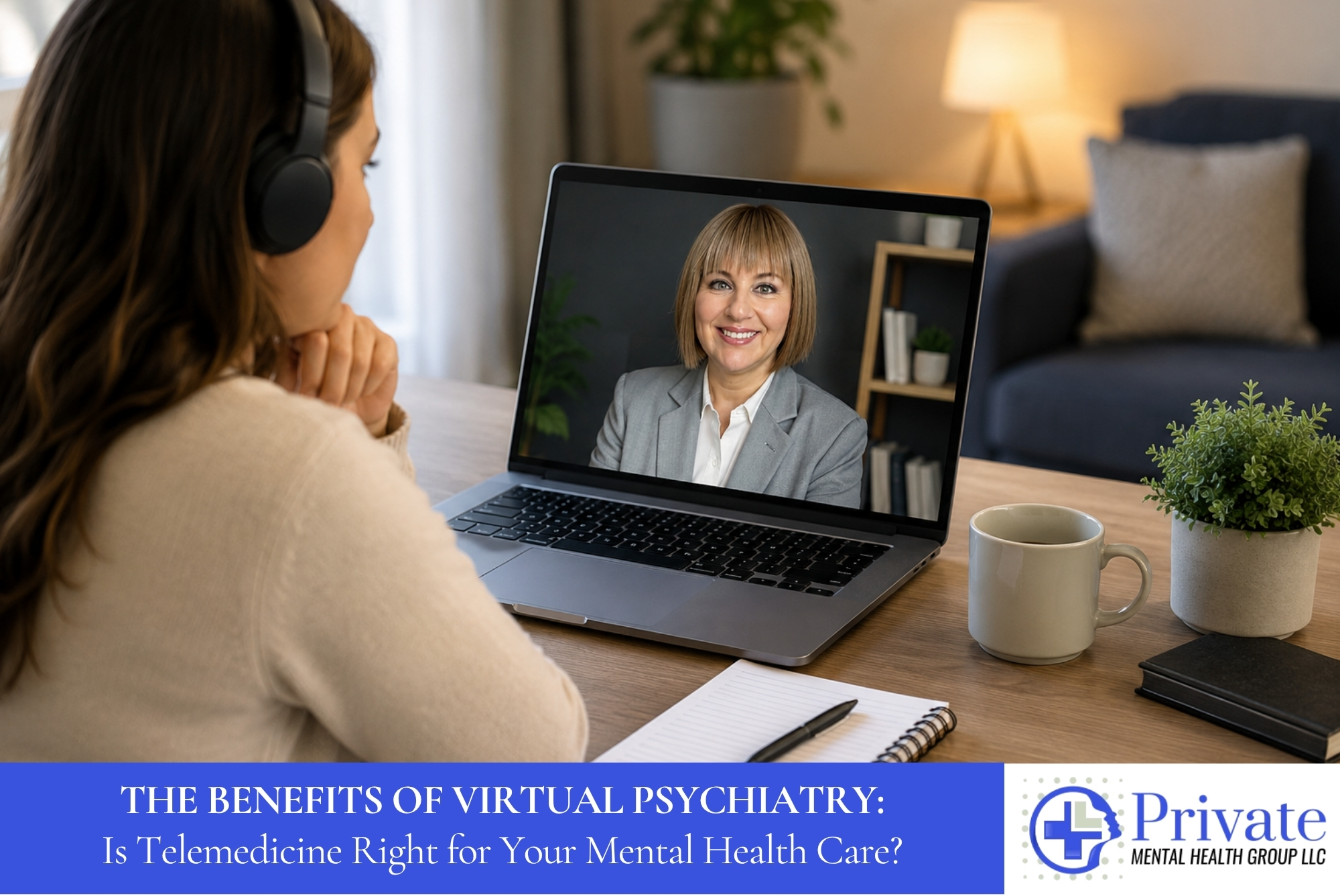
Virtual psychiatry has changed how many people access mental health services. Instead of traveling to a psychiatrist’s office for every appointment, patients may be able to meet with a qualified mental health professional through a secure video visit from home or another private location.
For people balancing work, family responsibilities, transportation challenges, or limited access to local psychiatric services, telemedicine can make mental health care more accessible and convenient. However, virtual psychiatry is not automatically the best choice for every person or every situation.
At Private Mental Health Group LLC, patients can access psychiatric and mental health services through in-person offices in Staten Island, New York City, and Fort Lauderdale, as well as telehealth services in multiple locations. Understanding what virtual psychiatry involves, its potential benefits, and its limitations can help you make a more informed decision about your mental health care.
What Is Virtual Psychiatry?
Virtual psychiatry, sometimes called telepsychiatry, is the delivery of psychiatric services through telecommunications technology, most commonly secure video conferencing. It allows a patient and psychiatric provider to communicate without being in the same physical office.
How Does a Virtual Psychiatry Appointment Work?
A virtual psychiatry appointment can resemble an in-person psychiatric visit in many ways. Depending on the patient’s needs and the services offered, an appointment may involve discussing symptoms, medical and mental health history, medications, changes in mood or behavior, treatment progress, and concerns affecting daily life.
The primary difference is the setting. Instead of sitting in the same examination room, the patient and provider communicate remotely.
Patients should generally choose a private, comfortable location with a reliable internet connection and a device capable of supporting video appointments. A quiet environment can also make it easier to discuss personal concerns openly.
What Can Telepsychiatry Be Used For?
Depending on an individual’s clinical needs, provider availability, and applicable regulations, telepsychiatry may be used for psychiatric evaluations, follow-up appointments, medication-management visits, symptom monitoring, and ongoing mental health care.
Whether a specific service can appropriately be provided virtually depends on the patient’s circumstances. A psychiatric professional can help determine whether telemedicine is suitable for a particular treatment plan.
What Are the Benefits of Virtual Psychiatry?
The growing use of telemedicine reflects more than convenience. Remote psychiatric services can address practical barriers that sometimes prevent people from obtaining or consistently participating in mental health care.
Greater Access to Psychiatric Care
Access is one of the most significant potential benefits of telepsychiatry.
A person’s choice of psychiatric providers can be limited by geography, transportation, mobility, scheduling, or the availability of mental health professionals in the surrounding community. Virtual appointments can reduce the importance of physical distance when remote treatment is clinically and legally appropriate.
This may be particularly valuable for patients who would otherwise need to travel significant distances for appointments.
Less Time Spent Traveling
Traditional appointments often require considerably more time than the appointment itself. Patients may need to drive, find parking, use public transportation, sit in waiting rooms, and travel home afterward.
Telepsychiatry can eliminate much of this additional travel time. For some patients, reducing these logistical demands can make it easier to incorporate psychiatric appointments into everyday life.
More Convenient Scheduling
Mental health treatment can require regular follow-up visits. Finding time for those appointments can become difficult when patients are also managing jobs, school, caregiving, and other responsibilities.
Virtual appointments may provide greater flexibility because patients do not necessarily need to account for travel to and from an office. This can make ongoing psychiatric care more manageable for some individuals.
Receiving Care in a Familiar Environment
Discussing mental health can feel deeply personal. Some patients may feel more comfortable speaking with a psychiatric provider while remaining in a familiar environment.
A private room at home can potentially reduce some of the stress associated with traveling to an unfamiliar medical setting. However, privacy remains essential. Patients should select a location where they feel comfortable discussing confidential information without being overheard.
Improved Continuity of Care
Consistency can be an important component of psychiatric treatment. When transportation, distance, or scheduling frequently interferes with appointments, maintaining regular follow-up may become more difficult.
By removing some of these barriers, virtual psychiatry may help certain patients maintain more consistent contact with their providers. Regular appointments can allow providers and patients to discuss treatment response, emerging concerns, medication-related questions, and changes in symptoms over time.
Expanded Options for People With Transportation or Mobility Challenges
Traveling to a medical office may be particularly challenging for individuals who do not drive, have limited access to transportation, or experience mobility difficulties.
When telehealth is appropriate, virtual psychiatric services can allow patients to receive professional care without navigating those transportation barriers.
Access From Different Geographic Areas
Telemedicine can expand access to providers beyond a patient’s immediate neighborhood, although psychiatric providers generally must comply with professional licensing requirements and other regulations governing where a patient is physically located during an appointment.
Private Mental Health Group LLC offers telehealth services in Delaware, Pennsylvania, Georgia, and Tinton Falls, in addition to its in-person office locations. Patients should contact the practice to confirm current service availability and eligibility for telehealth care in their location.
Virtual Psychiatry vs. In-Person Psychiatry
Neither virtual nor in-person psychiatry is inherently better for every patient. The appropriate format depends on individual circumstances, treatment needs, preferences, technology access, and clinical considerations.
When Virtual Psychiatry May Be a Good Fit
Telepsychiatry may be worth considering when traveling to appointments is inconvenient, a patient’s schedule makes office visits difficult, psychiatric providers are not easily accessible nearby, or the patient simply feels more comfortable receiving appropriate care remotely.
It can also be useful for people who need ongoing follow-up and want to reduce the logistical burden associated with frequent office visits.
When In-Person Psychiatry May Be Preferred
Some patients prefer face-to-face interaction with their provider. Others may lack a sufficiently private environment or reliable technology for virtual appointments.
There are also situations in which a clinician may determine that in-person assessment or a different level of care is more appropriate based on the patient’s symptoms, safety, medical circumstances, or treatment requirements.
Having access to both in-person and virtual options can provide greater flexibility as a person’s needs change.
Is Virtual Psychiatry Effective?
Telepsychiatry has become an established method of delivering behavioral health services, and research has examined its use across different patient populations and psychiatric settings.
Its effectiveness for an individual patient depends on multiple factors, including the condition being addressed, the therapeutic relationship, the patient’s participation, treatment adherence, technology quality, and whether remote care is appropriate for the clinical situation.
Does Virtual Care Change the Psychiatrist-Patient Relationship?
A strong professional relationship remains important regardless of whether psychiatric care takes place online or in person.
During virtual appointments, patients can still discuss symptoms, ask questions, communicate treatment goals, and raise concerns about their care. Good communication and an environment where the patient feels comfortable being candid are important in either setting.
Some people adapt quickly to video visits, while others strongly prefer meeting their provider in person. Personal preference is therefore a legitimate consideration when deciding between telemedicine and office-based care.
What Technology Do You Need for a Virtual Psychiatry Appointment?
Telepsychiatry generally does not require complicated technology.
A Reliable Internet Connection
A stable internet connection can help prevent interruptions and allow the patient and provider to communicate clearly throughout the appointment.
A Video-Enabled Device
Depending on the telehealth platform, patients may be able to use a smartphone, tablet, laptop, or desktop computer equipped with a camera and microphone.
A Private Space
Privacy is especially important during mental health appointments. Patients should try to participate from a quiet location where they can speak freely.
Headphones may provide additional privacy when other people are nearby, although a truly private room is preferable when available.
Familiarity With the Telehealth Platform
Before an initial appointment, it can be helpful to test the device, camera, microphone, speakers, and internet connection. Taking a few minutes to address technical issues beforehand may help the appointment begin smoothly.
How to Prepare for a Virtual Psychiatry Appointment
Preparing for a telepsychiatry appointment can help patients use their time with their provider effectively.
Find a Quiet and Comfortable Location
Choose a location where interruptions are unlikely and where you can discuss personal information privately.
Prepare Your Medication Information
If you currently take prescription medications, over-the-counter medications, vitamins, or supplements, having an accurate list available can be helpful.
Patients should also be prepared to discuss medication effectiveness, side effects, missed doses, or other concerns with their provider.
Write Down Your Questions
Mental health appointments can cover many subjects. Preparing questions beforehand can help ensure important concerns are not forgotten.
Questions might involve symptoms, medications, treatment goals, lifestyle considerations, follow-up plans, or what to do if symptoms change.
Be Open About Changes in Your Mental Health
Psychiatric providers rely heavily on information patients provide about their experiences.
Changes in mood, sleep, concentration, appetite, anxiety, energy, behavior, relationships, work performance, or everyday functioning can all provide useful clinical information. Patients should communicate significant changes and concerns as accurately as possible.
Medication Management Through Telepsychiatry
Medication management can be an important component of psychiatric care for some patients.
What Happens During Medication-Management Appointments?
Depending on the patient’s treatment plan, follow-up appointments may include discussion of current symptoms, medication response, possible side effects, adherence, changes in health, and whether the existing treatment approach remains appropriate.
Medication decisions should always be individualized and made between the patient and an appropriately qualified prescribing professional.
Can Every Medication Be Prescribed Through Telemedicine?
Not necessarily. Prescription requirements can depend on the medication, patient circumstances, federal and state regulations, licensing requirements, and current telemedicine rules.
Because these requirements can change, patients should contact Private Mental Health Group LLC directly with questions about specific medications or prescribing through telehealth.
Privacy and Virtual Mental Health Care
Privacy is understandably an important concern when discussing psychiatric care online.
How Can Patients Protect Their Privacy?
Patients can take practical steps to make virtual appointments more private, such as using a secure internet connection, participating from a private room, wearing headphones when appropriate, and avoiding public Wi-Fi when discussing sensitive health information.
Patients can also ask the practice how its telehealth system works and what privacy procedures apply to remote appointments.
Who May Benefit From Telepsychiatry?
There is no single profile of a person who can benefit from virtual psychiatric services.
Busy Professionals and Parents
People with demanding schedules may appreciate eliminating travel time and reducing the amount of time away from work or family responsibilities.
College Students and Working Adults
Individuals balancing education or employment with mental health care may find remote appointments easier to integrate into their schedules when telehealth is available and appropriate.
Patients With Limited Local Options
People who have difficulty accessing psychiatric providers in their immediate area may gain additional options through telemedicine, subject to provider licensing and service availability.
People Seeking Consistent Follow-Up
Patients who need ongoing psychiatric follow-up may find that remote appointments reduce logistical barriers that could otherwise interfere with regular visits.
What Are the Limitations of Virtual Psychiatry?
Telepsychiatry offers important advantages, but patients should also understand its limitations.
Technology Problems Can Interrupt Appointments
Poor internet connectivity, malfunctioning microphones, outdated devices, or software problems can affect communication.
Having a backup plan and testing technology before an appointment can reduce the likelihood of disruption.
Privacy May Be Difficult in Some Homes
Not everyone has access to a private room. Patients living with family members, roommates, or others may find it difficult to discuss sensitive concerns confidentially.
Some Situations Require In-Person or Emergency Care
Telepsychiatry is not a substitute for every form of mental health or emergency care. A provider may recommend an in-person assessment, emergency evaluation, or another level of treatment when clinically necessary.
Anyone experiencing an immediate or life-threatening emergency should seek emergency assistance rather than relying on a routine telehealth appointment.
How Do You Know Whether Telemedicine Is Right for You?
The decision should be based on more than convenience.
Consider Your Treatment Needs
Think about why you are seeking psychiatric care, the type of support you need, and whether a remote format would allow you to communicate comfortably and effectively.
Consider Your Environment
Ask yourself whether you have a reliable internet connection and a private location where you can participate without interruption.
Consider Your Personal Preferences
Some patients enjoy the convenience of telemedicine. Others value the experience of meeting their provider face to face.
Neither preference is inherently wrong. What matters is finding a format that supports appropriate, consistent, and productive care.
Discuss Your Options With a Mental Health Professional
A qualified provider can help assess whether telepsychiatry is appropriate based on your symptoms, treatment goals, medical circumstances, location, and other relevant factors.
Why Choosing the Right Psychiatric Provider Matters
Whether care is virtual or in person, selecting an appropriate mental health provider is an important decision.
Individualized Mental Health Care
Mental health experiences vary substantially from person to person. An effective psychiatric treatment plan should take into account the patient’s symptoms, history, goals, preferences, response to previous treatments, and broader circumstances.
Communication and Collaboration
Patients should feel able to ask questions and discuss concerns about their treatment. Collaborative communication can help patients better understand their care and participate meaningfully in treatment decisions.
Flexible Access to Care
For some patients, having both in-person and telehealth options can make psychiatric treatment easier to maintain over time.
Private Mental Health Group LLC provides in-person services from offices in Staten Island, New York City, and Fort Lauderdale, along with telehealth services in Delaware, Pennsylvania, Georgia, and Tinton Falls. Contact the practice to verify current availability and determine which type of appointment may be appropriate for you.
Frequently Asked Questions About Virtual Psychiatry
What is virtual psychiatry?
Virtual psychiatry, or telepsychiatry, involves receiving psychiatric services remotely through telecommunications technology, commonly secure video conferencing. Depending on the patient’s needs and provider, services can include psychiatric evaluations, follow-up visits, medication management, and ongoing treatment.
Is telepsychiatry the same as online therapy?
No. Psychiatry and psychotherapy are related but distinct areas of mental health care. Psychiatrists and other qualified psychiatric prescribers may evaluate mental health conditions and manage medications within their professional scope, while psychotherapy generally focuses on therapeutic interventions delivered by appropriately trained mental health professionals.
Can a psychiatrist diagnose mental health conditions through telehealth?
Psychiatric evaluations may be conducted through telehealth when the provider determines that remote assessment is clinically appropriate and permitted under applicable requirements. Whether telehealth is suitable can depend on the individual and the nature of the evaluation.
Can psychiatric medications be managed virtually?
Medication-management appointments may be available through telepsychiatry. Specific prescribing requirements vary according to the medication, clinical circumstances, provider licensure, and applicable federal and state regulations.
Do I need special equipment for a virtual psychiatry appointment?
Usually, patients need a compatible device with a camera and microphone, reliable internet access, and a private place to participate. The practice can provide information about its specific telehealth platform and technical requirements.
Is virtual psychiatry private?
Telehealth providers are expected to follow applicable privacy and healthcare requirements. Patients should also take steps to protect their privacy, such as using a private room and secure internet connection.
How long does a virtual psychiatry appointment take?
Appointment length can vary depending on whether the visit is an initial evaluation, follow-up, medication-management appointment, or another type of psychiatric service. Contact Private Mental Health Group LLC for information about appointment scheduling and expected visit length.
Can I switch between virtual and in-person appointments?
The availability of virtual and in-person appointments depends on factors including the patient’s location, provider availability, clinical needs, and applicable requirements. Private Mental Health Group LLC offers both telehealth services and in-person office locations. Contact the practice to discuss available options.
Where does Private Mental Health Group LLC provide in-person psychiatric services?
Private Mental Health Group LLC has in-person office locations in Staten Island, New York City, and Fort Lauderdale.
Where are telehealth services available?
Private Mental Health Group LLC lists telehealth services in Delaware, Pennsylvania, Georgia, and Tinton Falls. Because telehealth availability can depend on licensing and other requirements, patients should confirm current eligibility with the practice when scheduling.
Is telepsychiatry appropriate for children or adolescents?
The suitability of telepsychiatry for a child or adolescent depends on factors such as age, clinical needs, family involvement, provider expertise, and the type of evaluation or treatment required. Parents or guardians should discuss these considerations directly with an appropriate mental health professional.
What should I have ready for my first virtual psychiatry appointment?
It can be helpful to have a medication list, relevant medical and mental health history, information about previous treatment, and questions you want to discuss. You should also test your internet connection, camera, and microphone before the appointment.
What if my internet connection fails during an appointment?
Ask the practice about its procedures for technical disruptions. Having a charged phone and updated contact information available may provide an alternative way for the office to communicate with you if a video connection is unexpectedly interrupted.
How do I decide between virtual and in-person psychiatric care?
Consider your clinical needs, privacy, technology access, schedule, transportation, comfort with video communication, and personal preferences. A mental health professional can also help determine whether remote care is appropriate for your situation.
How can I schedule an appointment with Private Mental Health Group LLC?
Patients can visit sanityteam.com or call (954) 794-9000 to inquire about appointments, current services, telehealth eligibility, and in-person availability.
Contact Information
Private Mental Health Group LLC
Website: sanityteam.com
Phone: (954) 794-9000
In-Person Offices
Staten Island, NY
188 Hylan Blvd.
Staten Island, NY 10305
New York City, NY
80 Beekman Street, Unit K
New York, NY 10038
Fort Lauderdale, FL
12 SE 7th Street, Suite 705
Fort Lauderdale, FL 33301
Telehealth Services
Delaware
Pennsylvania
Georgia
Tinton Falls
Contact Private Mental Health Group LLC to confirm current telehealth availability, provider licensing, appointment options, and whether virtual psychiatric care is appropriate for your individual needs.