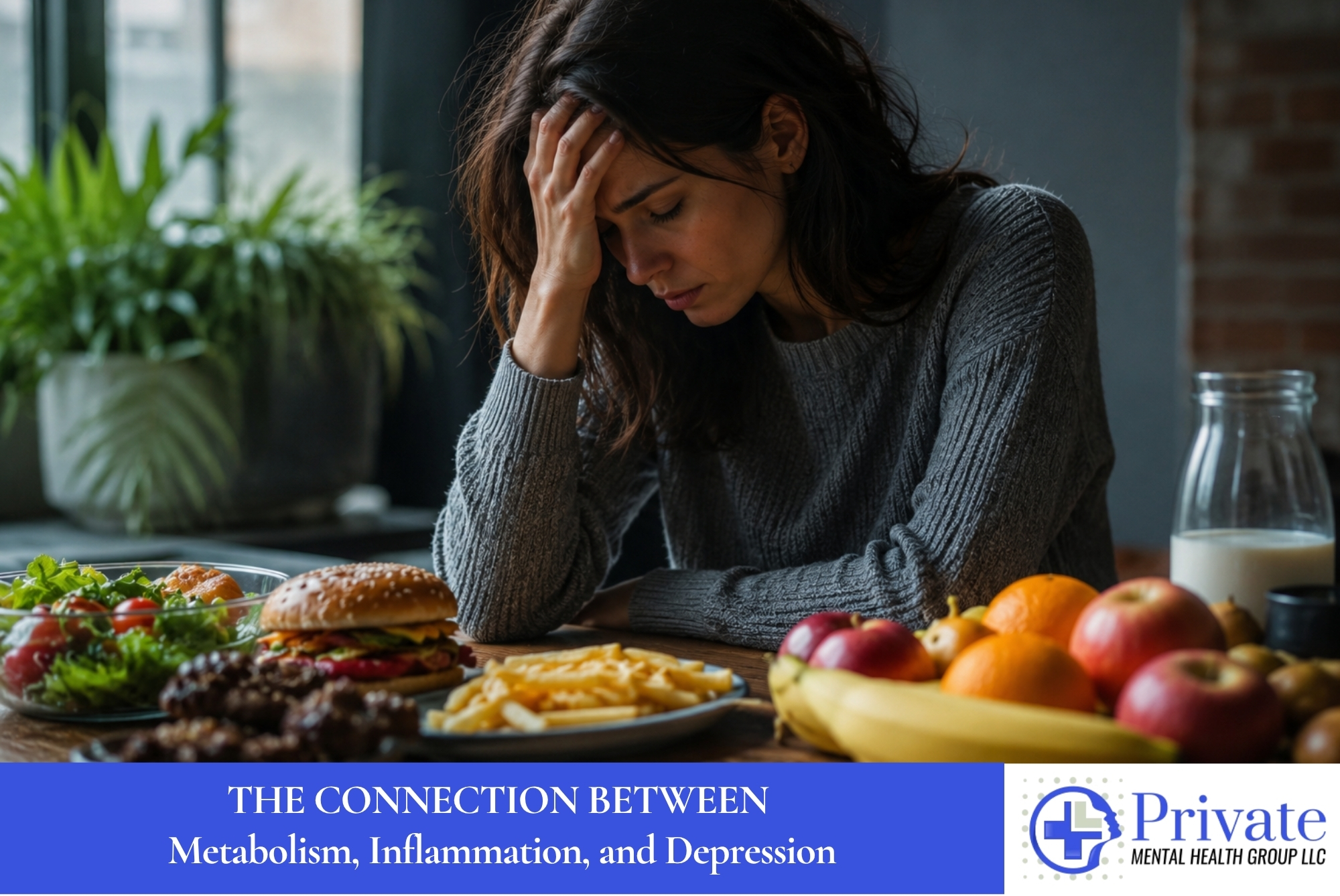
Depression is often discussed in terms of mood, stress, life experiences, and brain chemistry. While each of these factors can be important, a growing body of research is examining another dimension of mental health: the relationship among metabolism, inflammation, and depressive symptoms.
Metabolism is more than the rate at which the body burns calories. It encompasses the chemical processes that allow cells to produce and use energy, regulate blood sugar, synthesize hormones, repair tissues, and maintain normal physiological function. Inflammation, meanwhile, is an essential immune response that helps the body respond to injury and infection. When inflammatory activity becomes persistent or dysregulated, however, it may affect systems far beyond the immune system—including the brain.
Researchers increasingly describe depression as a heterogeneous condition, meaning that different biological, psychological, social, and environmental pathways may contribute to similar symptoms in different people. For some individuals, metabolic health and inflammatory signaling may be part of that picture.
Understanding these connections can help patients and clinicians take a more comprehensive view of mental health without reducing depression to a single cause.
Understanding the Metabolism–Inflammation–Depression Connection
What Does Metabolism Have to Do With Mental Health?
Metabolism refers to the many interconnected processes through which the body converts nutrients into energy and uses that energy to sustain life. These processes affect virtually every organ, including the brain.
The brain has substantial energy requirements. Neurons need a reliable supply of energy to maintain electrical activity, communicate through neurotransmitters, and adapt to changing demands. Metabolic disturbances can therefore have consequences that extend beyond traditional measures such as body weight.
Researchers have investigated associations between depression and metabolic factors such as insulin resistance, altered glucose regulation, obesity, metabolic syndrome, and changes in lipid metabolism. These associations do not mean that every person with depression has a metabolic disorder—or that metabolic dysfunction inevitably causes depression. Rather, they suggest that metabolic and psychiatric health can intersect through multiple biological pathways.
What Is Inflammation?
Inflammation is part of the body’s defense system. During an infection or injury, immune cells release signaling molecules that help coordinate the body’s response.
Acute inflammation is generally temporary and serves an important protective purpose. Chronic or persistent low-grade inflammation is different. It can occur when inflammatory signaling remains active over longer periods and has been studied in connection with numerous chronic health conditions.
Researchers have also investigated inflammatory markers in people with depression. Some studies and meta-analyses have identified higher average concentrations of certain inflammatory biomarkers, including C-reactive protein and inflammatory cytokines, in subsets of people with depressive disorders.
Importantly, these findings describe patterns across populations. An inflammatory marker alone cannot establish that someone has depression, identify its cause, or determine which psychiatric treatment will work best.
How Inflammation May Affect the Brain
Inflammatory Signaling and Neurotransmitters
The immune system and nervous system continuously communicate. Cytokines and other inflammatory mediators may influence pathways involved in neurotransmitter synthesis, release, transport, and metabolism.
Researchers have examined how inflammatory processes may affect neurotransmitter systems associated with mood, motivation, reward, sleep, and cognition. These include serotonin, dopamine, and glutamate pathways.
This area of research is particularly important because it may help explain why depressive disorders are biologically diverse. Two people can meet diagnostic criteria for depression while having substantially different combinations of biological vulnerabilities, environmental stressors, symptoms, and treatment needs.
Inflammation, Motivation, and Reward
One particularly interesting area of psychiatric research involves the brain’s reward system.
Inflammatory activity has been investigated for its potential relationship with reduced motivation and anhedonia—the diminished ability to experience pleasure or interest. Researchers are exploring whether inflammation can alter neural circuits involved in reward processing and effort.
These findings should not be interpreted as evidence that inflammation is the cause of anhedonia in every patient. They instead support a broader model in which immune activity may be one contributor among many.
Inflammation and the Stress Response
Psychological stress and inflammatory signaling can interact.
The hypothalamic-pituitary-adrenal axis, commonly called the HPA axis, helps regulate the body’s response to stress. Chronic stress can influence cortisol regulation, sleep, immune signaling, appetite, and metabolic function. In turn, changes in these systems may influence emotional and cognitive functioning.
This creates the possibility of interconnected feedback loops rather than a simple one-directional pathway.
Metabolic Health and Depression
Insulin Resistance and the Brain
Insulin is best known for regulating blood glucose, but insulin signaling also has functions within the central nervous system.
Insulin resistance occurs when cells become less responsive to insulin. Researchers have investigated associations between insulin resistance and depression, including whether altered insulin signaling may influence cognition, inflammation, neural function, and treatment outcomes.
However, insulin resistance should not be assumed based on psychiatric symptoms. Appropriate medical evaluation and laboratory testing are necessary when a metabolic disorder is suspected.
Blood Sugar Regulation and Mood
Glucose is an important energy source for the brain, and stable metabolic regulation supports normal physiological function.
People sometimes attribute mood changes, irritability, fatigue, or concentration difficulties entirely to “blood sugar.” In practice, these symptoms are nonspecific and can have many causes, including depression, anxiety, sleep disorders, medication effects, endocrine conditions, nutritional issues, and other medical problems.
For this reason, persistent psychiatric symptoms deserve a comprehensive clinical evaluation rather than self-diagnosis based on one metabolic theory.
Metabolic Syndrome and Depression
Metabolic syndrome refers to a cluster of cardiovascular and metabolic risk factors that can include abdominal obesity, elevated blood pressure, elevated blood glucose, high triglycerides, and low HDL cholesterol.
Research has demonstrated an association between metabolic syndrome and depression. The relationship may also be bidirectional: depressive illness can influence physical activity, sleep, eating patterns, stress physiology, and adherence to medical care, while metabolic disease may contribute biological and psychological burdens of its own.
Recognizing this overlap reinforces the importance of treating mental and physical health as interconnected rather than separate concerns.
The Role of Mitochondria in Mental Health Research
Why Cellular Energy Matters
Mitochondria are cellular structures central to energy production. They generate adenosine triphosphate (ATP), which cells use to power numerous biological processes.
Because the brain requires substantial energy, scientists have become increasingly interested in mitochondrial function in psychiatric and neurological research.
Studies are examining whether changes in mitochondrial energy production, oxidative stress, cellular signaling, and related processes may contribute to psychiatric symptoms in some individuals.
Mitochondrial research is promising, but it should not be interpreted to mean that depression is simply a “mitochondrial disease.” Depression is considerably more complex, and research continues to investigate how cellular energetics fits within broader biological and psychosocial models.
Oxidative Stress, Inflammation, and Depression
What Is Oxidative Stress?
Normal metabolism produces reactive molecules known as free radicals and other reactive oxygen species. The body has antioxidant systems that help regulate them.
Oxidative stress occurs when the balance between reactive molecules and antioxidant defenses becomes disrupted. Researchers have investigated interactions among oxidative stress, mitochondrial function, immune activation, and depression.
These mechanisms may overlap. For example, inflammatory activity can affect oxidative processes, while oxidative stress can influence inflammatory signaling.
The significance of these pathways for individual patients remains an active area of scientific investigation.
The Gut-Brain Axis and Metabolic Psychiatry
How the Gut Communicates With the Brain
The gastrointestinal system, immune system, endocrine system, and nervous system participate in extensive two-way communication. This network is often called the gut-brain axis.
The intestinal microbiome—the community of microorganisms living in the digestive tract—has become an important subject of research because gut microorganisms participate in nutrient metabolism and produce compounds capable of interacting with immune and neural pathways.
Researchers are studying potential relationships among microbiome composition, inflammation, metabolic health, stress responses, and psychiatric disorders.
Does the Microbiome Cause Depression?
Current evidence does not support reducing depression to a single “gut imbalance.”
Microbiome research is rapidly evolving, and findings from animal models or small human studies do not automatically translate into established clinical treatments. Probiotics, restrictive diets, or commercial microbiome tests should not be viewed as substitutes for evidence-based psychiatric care.
The gut-brain axis is better understood as one component of a much larger biological system that researchers are continuing to investigate.
Sleep as a Link Between Metabolism, Inflammation, and Mood
Why Sleep Deserves Attention
Sleep affects metabolic regulation, appetite signaling, immune activity, cognitive performance, and emotional regulation.
Poor sleep can also accompany depression. Some people experience insomnia, while others may sleep excessively or have disrupted sleep schedules.
Because sleep, metabolism, inflammation, and mood can influence one another, evaluating sleep patterns can be an important part of comprehensive psychiatric care.
Persistent insomnia, excessive daytime sleepiness, loud snoring, witnessed breathing interruptions, or other significant sleep problems may also warrant evaluation for a primary sleep disorder.
Lifestyle Factors and the Biology of Depression
Physical Activity
Regular physical activity can benefit cardiovascular and metabolic health and has evidence supporting its role as part of depression prevention and treatment strategies for many individuals.
Exercise can influence insulin sensitivity, sleep, inflammatory signaling, stress regulation, and brain function. The appropriate type and intensity of activity, however, depend on a person’s health, abilities, and medical circumstances.
Exercise should not be framed as a matter of simply “trying harder” when someone has clinical depression. Depression itself can substantially reduce energy, motivation, and executive functioning.
Nutrition
Dietary patterns affect metabolic and cardiovascular health, and nutritional psychiatry is investigating how diet quality may relate to mental health.
Rather than focusing on a single “anti-inflammatory food,” research often examines broader dietary patterns. Nutrient adequacy, dietary variety, fiber intake, and overall food quality may be more meaningful than attributing psychiatric symptoms to one ingredient.
Major dietary changes or supplements should be discussed with qualified healthcare professionals when medical conditions, medications, pregnancy, or nutritional deficiencies are relevant.
Smoking and Alcohol
Smoking can contribute to cardiovascular disease and inflammatory burden, while alcohol can affect sleep, mood, medication response, judgment, and metabolic health.
Substance use can also complicate the assessment and treatment of depression. Patients should be open with their healthcare professionals about alcohol, nicotine, cannabis, recreational substances, and supplements so that clinicians can consider potential interactions and risks.
Can Depression Affect Metabolic Health?
The Relationship Can Work in Both Directions
The relationship between depression and metabolism is not necessarily one-way.
Depression may affect appetite, food choices, physical activity, sleep, stress hormones, and the ability to maintain preventive medical care. Some psychiatric medications can also affect weight, appetite, glucose regulation, or lipids in certain patients.
That does not mean people should avoid medication because of metabolic concerns. Psychiatric medications can be highly beneficial, and untreated depression carries substantial risks of its own.
Instead, treatment decisions should consider benefits, risks, medical history, previous treatment response, patient preferences, and appropriate monitoring.
Why Personalized Psychiatric Assessment Matters
Depression Is Not One Biological Condition
Major depressive disorder is diagnosed clinically based on patterns of symptoms, duration, impairment, and other diagnostic considerations—not through a single inflammatory or metabolic laboratory test.
A comprehensive psychiatric evaluation may consider mood symptoms, anxiety, sleep, energy, cognition, appetite, substance use, medications, medical conditions, family history, previous treatments, psychosocial stressors, and safety concerns.
When clinically appropriate, coordination with primary care physicians or other medical specialists may also help identify medical factors that could contribute to psychiatric symptoms.
Looking Beyond a Single Biomarker
It can be tempting to search for one laboratory value that explains depression. Current science does not support such a simple approach.
Inflammatory biomarkers can be affected by infection, autoimmune disease, obesity, smoking, medications, exercise, injury, and many other variables. Metabolic measurements similarly require clinical context.
Laboratory findings should therefore be interpreted by qualified healthcare professionals alongside symptoms, medical history, examination findings, medications, and other relevant information.
How Depression Is Treated
Evidence-Based Treatment Is Individualized
Treatment depends on the diagnosis, symptom severity, medical history, previous treatment response, patient preferences, and other clinical factors.
Depending on the individual, a treatment plan may include psychotherapy, psychiatric medication, lifestyle interventions, management of coexisting medical conditions, sleep interventions, or other evidence-based psychiatric treatments.
Some people respond to an initial treatment, while others require adjustments or a combination of approaches.
The emerging science surrounding metabolism and inflammation may eventually help clinicians identify more biologically informed subtypes of depression and improve treatment selection. At present, however, these concepts should complement—not replace—established psychiatric evaluation and treatment.
Frequently Asked Questions About Metabolism, Inflammation, and Depression
Can inflammation cause depression?
Inflammation may contribute to depressive symptoms in some individuals, but depression cannot generally be attributed to inflammation alone. Genetics, stress, medical conditions, psychological factors, social circumstances, sleep, medications, substance use, and other biological mechanisms can all influence depression.
Is depression a metabolic disorder?
Depression is classified as a psychiatric disorder, not simply a metabolic disorder. However, metabolic abnormalities and depression can occur together, and researchers are investigating metabolic mechanisms that may contribute to particular forms or symptom patterns of depression.
What is metabolic psychiatry?
Metabolic psychiatry is an emerging area that examines relationships among metabolic health, cellular energy, nutrition, brain function, and psychiatric disorders. It is an evolving field, and not every proposed metabolic intervention has sufficient evidence for routine clinical use.
Does insulin resistance affect depression?
Research has found associations between insulin resistance and depression, but an association does not prove that insulin resistance is the cause of a particular person’s depression. Patients concerned about blood sugar or insulin resistance should discuss appropriate evaluation with a healthcare professional.
Can high blood sugar cause depression?
Diabetes and impaired glucose regulation have complex relationships with mental health, but depression should not automatically be attributed to high blood sugar. Both conditions deserve appropriate clinical evaluation when suspected.
Can chronic inflammation affect serotonin?
Inflammatory signaling may influence biochemical pathways involved in serotonin and other neurotransmitter systems. The relationship is complex, however, and cannot be reduced to a simple formula such as “inflammation equals low serotonin.”
Does inflammation affect dopamine?
Research suggests that inflammatory signaling may influence dopamine-related pathways involved in reward, motivation, and effort. Scientists are investigating whether these mechanisms contribute to symptoms such as fatigue and anhedonia in subsets of patients with depression.
Can reducing inflammation cure depression?
There is currently no basis for claiming that simply “reducing inflammation” will cure depression. Appropriate treatment depends on the individual’s diagnosis and clinical circumstances. Patients should be cautious about supplements, diets, or treatments marketed as universal anti-inflammatory cures for psychiatric disorders.
Are inflammatory blood tests used to diagnose depression?
No single inflammatory blood test diagnoses major depressive disorder. Tests such as C-reactive protein may provide information about inflammatory activity for particular medical purposes, but psychiatric diagnosis remains based on a clinical evaluation.
Can metabolic testing determine which antidepressant will work?
Routine metabolic laboratory testing cannot currently predict with certainty which antidepressant will work for an individual. Medication selection involves multiple factors, including symptoms, medical history, side-effect considerations, drug interactions, prior response, and patient preferences.
Can antidepressants affect metabolism?
Some psychiatric medications can affect appetite, weight, glucose regulation, or lipid levels in certain individuals. The effects differ substantially among medications and patients. Clinicians may recommend appropriate monitoring based on the medication and a patient’s individual risk factors.
Can poor sleep increase inflammation?
Sleep disruption has been associated with changes in inflammatory and metabolic regulation. Because sleep problems can also worsen mood, concentration, and energy, persistent sleep disturbances should be discussed during a psychiatric or medical evaluation.
Is there an anti-inflammatory diet for depression?
No single diet has been established as a universal treatment for depression. Research has examined relationships between overall dietary patterns and mental health, but dietary interventions should not replace appropriate psychiatric care.
Can exercise reduce inflammation and help depression?
Physical activity can improve several aspects of metabolic and cardiovascular health and can be helpful for depressive symptoms in many people. Its effects are likely mediated through multiple mechanisms rather than inflammation alone.
Do gut bacteria influence depression?
The gut microbiome can interact with metabolic, immune, and nervous-system pathways, and researchers are studying its potential role in depression. The science is still developing, and microbiome findings currently cannot diagnose depression or dictate a specific psychiatric treatment for most patients.
Are probiotics a treatment for depression?
Research into probiotics and other microbiome-directed interventions is ongoing. They should not be considered a replacement for established depression treatments unless a qualified clinician recommends them as part of an individualized plan.
Can obesity contribute to depression?
Obesity and depression are associated at the population level, and their relationship can involve biological, psychological, environmental, medication-related, and social factors. Body weight alone does not establish why someone has depression.
Can depression make metabolic health worse?
It can. Depression may influence sleep, appetite, activity, stress physiology, substance use, and engagement with medical care. These factors can affect metabolic health over time, which is one reason integrated physical and mental healthcare can be valuable.
Should someone with depression have metabolic testing?
Testing should be individualized. A healthcare professional may recommend laboratory testing based on symptoms, medical history, medications, family history, physical findings, or other risk factors. Not everyone with depression requires the same tests.
When should I see a psychiatrist for depression?
Consider a psychiatric evaluation when persistent sadness, loss of interest, low motivation, sleep or appetite changes, fatigue, difficulty concentrating, feelings of hopelessness, or other symptoms begin interfering with work, relationships, daily responsibilities, or quality of life. Prompt professional evaluation is particularly important when symptoms are severe, rapidly worsening, or accompanied by concerns about personal safety.
A More Integrated View of Mental Health
Research into metabolism, inflammation, mitochondrial function, immune signaling, sleep, and the gut-brain axis is expanding the scientific understanding of depression. Rather than proving that depression has one hidden metabolic cause, this research illustrates how closely interconnected the brain and body are.
For patients, the practical message is that psychiatric care does not have to ignore physical health. A thoughtful evaluation can consider psychiatric symptoms alongside medications, sleep, lifestyle, medical conditions, metabolic risk factors, and other clinically relevant information.
Private Mental Health Group LLC provides psychiatric services through in-person offices and telehealth availability in multiple locations. Individuals experiencing depression or other mental health concerns can contact the practice to learn more about available services and appropriate evaluation.
This article is intended for educational purposes and does not replace individualized medical or psychiatric advice, diagnosis, or treatment.
Contact Information
Private Mental Health Group LLC
Website: sanityteam.com
Phone: (954) 794-9000
In-Person Offices
Staten Island, NY
188 Hylan Blvd.
Staten Island, NY 10305
New York City, NY
80 Beekman Street, Unit K
New York, NY 10038
Fort Lauderdale, FL
12 SE 7th Street, Suite 705
Fort Lauderdale, FL 33301
Telehealth Services
Telehealth services are available in:
Delaware
Pennsylvania
Georgia
Tinton Falls
Please contact Private Mental Health Group LLC to confirm current service availability, licensing eligibility, and appointment options for your location.