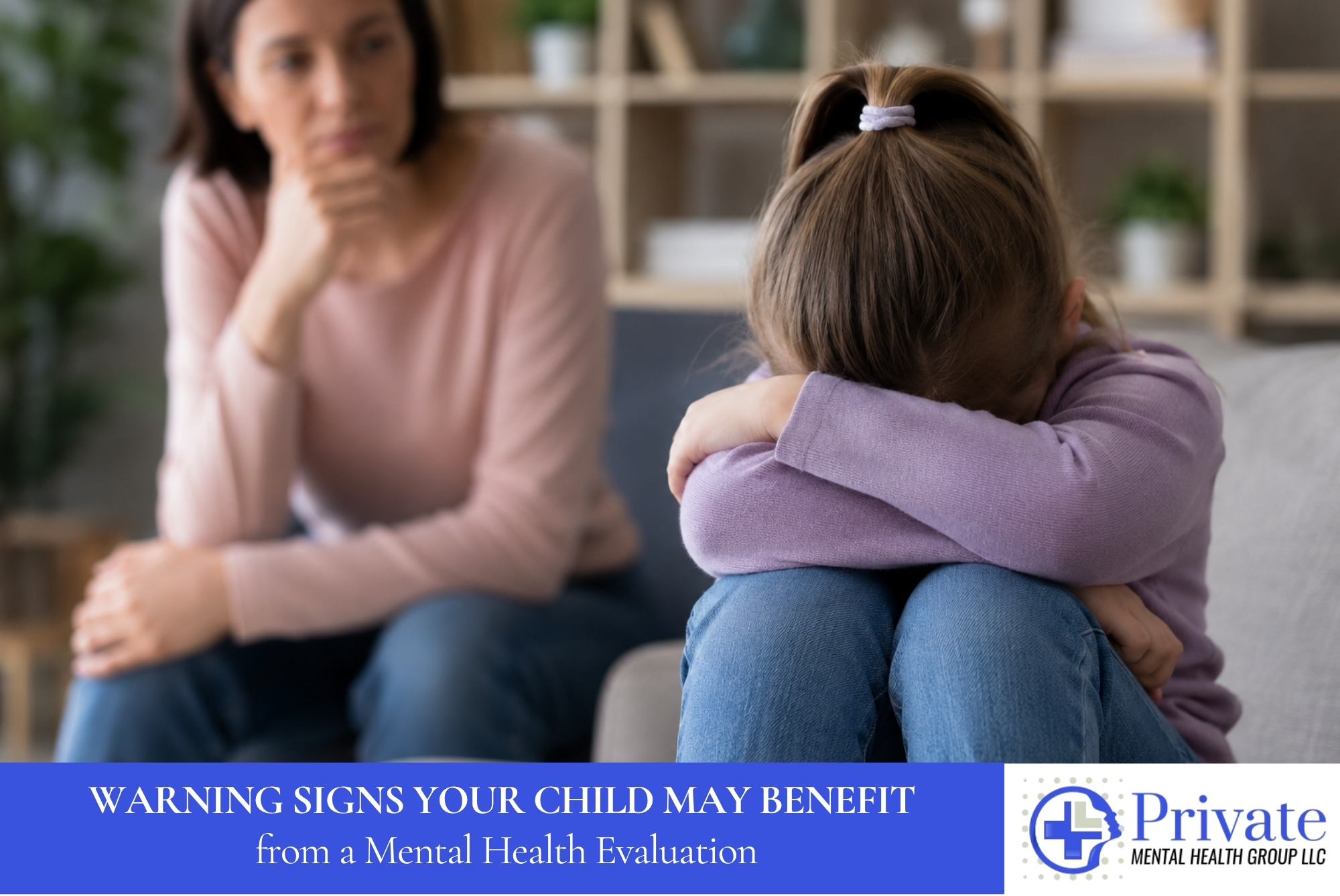
 Children and adolescents experience a wide range of emotions as they grow. Stress about school, changing friendships, family transitions, social pressures, and developmental changes can all affect a young person’s mood and behavior. In many cases, these reactions are temporary. At other times, persistent or significant changes may indicate that a child could benefit from a professional mental health evaluation.
A mental health evaluation is not simply about assigning a diagnosis. It is a structured process designed to better understand a child’s emotional well-being, behavior, development, daily functioning, relationships, and individual needs. An evaluation can help families identify concerns, rule out possible contributing factors, and determine whether counseling, psychiatric care, behavioral interventions, school-based support, or another form of care may be appropriate.
At Private Mental Health Group LLC, families can access professional mental health services through in-person offices in New York and Florida, along with telehealth services in supported locations. Recognizing potential warning signs early can help parents and caregivers make informed decisions about seeking professional support.
Understanding Children’s Mental Health
Mental Health Concerns Can Look Different in Children
Mental health symptoms do not always appear the same way in children as they do in adults. A child who is struggling with anxiety, depression, trauma, attention difficulties, or another concern may not have the vocabulary or emotional awareness to explain what they are experiencing.
Instead, emotional distress may appear as irritability, anger, withdrawal, physical complaints, difficulty concentrating, changes in sleep, declining academic performance, or conflicts at home or school.
This is one reason parents and caregivers should consider patterns rather than focusing on a single behavior. A difficult day or occasional emotional outburst does not necessarily indicate a mental health disorder. Persistent changes, multiple symptoms occurring together, or problems that interfere with everyday functioning may deserve closer attention.
When Does a Behavior Become a Warning Sign?
Age, developmental stage, temperament, circumstances, frequency, duration, and severity all matter. For example, occasional worries are common in childhood. Worry becomes more concerning when it is intense, difficult to control, persistent, or prevents a child from participating in school, friendships, family activities, or age-appropriate experiences.
Parents may find it useful to ask three questions: Is this behavior significantly different from my child’s usual behavior? Has it persisted or continued to worsen? Is it interfering with my child’s ability to function?
When the answer to one or more of these questions is yes, discussing the concern with a qualified healthcare or mental health professional may be appropriate.
Warning Signs Your Child May Benefit from a Mental Health Evaluation
Persistent Sadness or Frequent Tearfulness
Children can feel sad because of disappointments, conflicts, losses, or stressful experiences. However, sadness that persists, appears disproportionate to circumstances, or is accompanied by a noticeable loss of interest in normal activities can warrant professional attention.
Parents may notice that their child seems unusually down, cries frequently, appears hopeless, or no longer becomes excited about things they previously enjoyed.
Increased Irritability, Anger, or Emotional Outbursts
In children and adolescents, emotional difficulties do not always present as obvious sadness. Irritability can sometimes be a prominent sign.
Frequent anger, severe emotional outbursts, unusual aggression, or reactions that seem significantly stronger than the situation would ordinarily warrant may indicate that a child is having difficulty regulating emotions. A mental health evaluation can help explore what may be contributing to these behaviors.
Excessive Worry, Fear, or Anxiety
Anxiety can affect children of virtually any age. Warning signs may include constant worrying, repeated reassurance seeking, fear of making mistakes, difficulty separating from caregivers, avoidance of certain places or situations, or physical symptoms associated with stressful circumstances.
Anxiety becomes especially important to evaluate when fear begins limiting a child’s everyday life.
Withdrawal From Family and Friends
A child who suddenly spends substantially more time alone or stops interacting with friends and family may be experiencing emotional distress.
Some children naturally prefer quieter activities or smaller social circles. The important consideration is whether withdrawal represents a significant change from the child’s normal personality or behavior.
Loss of Interest in Favorite Activities
A noticeable loss of interest in hobbies, sports, friendships, games, clubs, or family activities can be another warning sign, particularly when it occurs alongside sadness, irritability, fatigue, or social withdrawal.
A professional evaluation can help determine whether these changes may be associated with depression, anxiety, stress, trauma, social difficulties, or another concern.
Significant Changes in Sleep
Sleep and mental health are closely connected. Potential warning signs include persistent difficulty falling asleep, waking frequently, nightmares, sleeping much more than usual, difficulty getting out of bed, or a substantial change in a child’s normal sleep schedule.
Sleep problems can have many causes, including medical and environmental factors, so they should not automatically be assumed to represent a psychiatric condition.
Significant Changes in Appetite or Eating Patterns
Major or persistent changes in appetite, eating behavior, or attitudes toward food and body image can deserve professional attention.
Parents may observe unusually restrictive eating, frequent skipped meals, episodes of overeating, strong anxiety around food, or intense preoccupation with weight or appearance. Because eating-related concerns can have both physical and psychological consequences, timely professional assessment may be particularly important.
Declining Academic Performance
An unexpected drop in grades does not necessarily mean that a child has a mental health condition. Academic problems can have many explanations.
However, declining performance combined with concentration problems, school avoidance, anxiety, sleep changes, behavioral difficulties, or emotional changes may signal a broader concern. Evaluating the complete picture can help distinguish between emotional, behavioral, developmental, educational, environmental, and other possible contributors.
Difficulty Concentrating or Staying Organized
Children may occasionally become distracted, forget assignments, or have trouble completing tasks. Persistent attention, organization, or impulse-control difficulties that affect multiple areas of life may warrant further evaluation.
A comprehensive assessment is important because concentration problems can be associated with numerous factors, including stress, anxiety, depression, inadequate sleep, learning difficulties, attention-related conditions, or environmental circumstances.
Frequent Physical Complaints Without a Clear Explanation
Emotional distress can sometimes be expressed physically. Children experiencing stress or anxiety may report recurring headaches, stomachaches, nausea, fatigue, or other physical discomfort.
Physical symptoms should be appropriately assessed by a medical professional because they can have genuine medical causes. When medical explanations have been evaluated and symptoms appear closely connected to stress or emotional situations, a mental health evaluation may also be helpful.
School Avoidance or Refusal
Repeated attempts to avoid school can be associated with anxiety, bullying, academic difficulties, social problems, depression, separation concerns, or other stressors.
Parents may notice frequent complaints of illness before school, distress on Sunday evenings, repeated requests to stay home, difficulty entering the school building, or unexplained absences.
Understanding why a child is avoiding school is essential. Simply treating the behavior as defiance may overlook an underlying emotional or environmental problem.
Changes in Friendships or Social Functioning
Friendships naturally change during childhood and adolescence. More significant patterns—such as losing multiple friendships, repeated interpersonal conflicts, sudden isolation, intense fear of social situations, or an inability to maintain relationships—can sometimes indicate emotional or behavioral difficulties.
An evaluation can provide a broader understanding of a child’s social functioning and possible contributing factors.
Repetitive or Compulsive Behaviors
Repeated checking, counting, washing, arranging, reassurance seeking, or rituals that a child feels compelled to perform may warrant assessment, particularly when these behaviors consume substantial time or interfere with daily activities.
A qualified mental health professional can evaluate whether these behaviors are developmentally typical, related to anxiety, or consistent with another concern.
Regression or Loss of Previously Established Skills
Younger children sometimes temporarily return to earlier behaviors during periods of stress. Examples can include increased clinginess or difficulty sleeping independently.
More persistent or significant regression, especially when accompanied by other emotional or behavioral changes, should be discussed with an appropriate professional.
Risk-Taking or Significant Behavioral Changes in Adolescents
Adolescence naturally involves increasing independence, but sudden or escalating risk-taking behavior can be concerning. Examples may include repeated dangerous decisions, substantial changes in peer groups, severe impulsivity, frequent rule-breaking, or other behaviors that put the adolescent or others at risk.
Rather than assuming that every behavioral change is simply part of adolescence, parents can consider whether there has been a substantial departure from their teenager’s typical functioning.
Talking About Death, Self-Harm, or Suicide
Statements about wanting to die, self-harm, suicide, or feeling that life is not worth living should be taken seriously. Warning signs can also include self-injury, giving away meaningful possessions, researching methods of self-harm, or saying that others would be better off without them.
If a child or adolescent appears to be in immediate danger, has attempted suicide, has a specific plan or intent to harm themselves or someone else, or cannot be kept safe, seek immediate emergency assistance through 911 or the nearest emergency department. A mental health evaluation should not be treated as a substitute for emergency intervention when there is an immediate safety risk.
Why Early Mental Health Evaluation Can Be Important
Early Assessment Can Clarify What Is Happening
Parents often know when something about their child’s behavior feels different but may not know why. Several conditions can produce overlapping symptoms, and emotional changes can also result from medical, educational, developmental, family, or environmental factors.
A professional evaluation helps organize these observations into a more complete clinical picture.
Evaluation Does Not Automatically Mean a Diagnosis
Seeking an evaluation does not mean a child will necessarily receive a psychiatric diagnosis or need medication.
The purpose is to understand the child’s needs. Depending on the findings, recommendations could include monitoring symptoms, psychotherapy, family support, behavioral strategies, coordination with a pediatrician or school, psychiatric treatment, or other appropriate interventions.
Earlier Support May Reduce Disruption to Daily Life
When emotional or behavioral concerns are identified before they become severe, families may have more opportunities to address problems affecting school, relationships, sleep, confidence, and family functioning.
Parents do not need to wait until a child reaches a crisis before requesting professional guidance.
What Happens During a Child Mental Health Evaluation?
Gathering a Comprehensive History
A mental health professional may ask about the child’s emotional and behavioral symptoms, developmental history, medical history, school performance, family environment, friendships, sleep, appetite, stressors, and significant life experiences.
The specific evaluation process depends on the child’s age, circumstances, symptoms, and the type of clinician performing the assessment.
Speaking With the Child and Caregiver
Depending on age and clinical circumstances, portions of an evaluation may involve the caregiver and child together, while other portions may occur separately.
Creating an age-appropriate environment can help children and teenagers communicate more openly about what they are experiencing.
Reviewing Symptoms and Daily Functioning
A clinician may evaluate not only which symptoms are present but also their frequency, duration, severity, triggers, and effects on everyday life.
This functional assessment is important because similar behaviors can have very different meanings depending on their context.
Developing Recommendations
Following the evaluation, the clinician can discuss findings and appropriate next steps with the family. Recommendations are individualized rather than based solely on one symptom.
How Parents Can Prepare for an Evaluation
Document Behavioral and Emotional Changes
Before an appointment, consider making notes about when symptoms began, how frequently they occur, what seems to trigger them, and how long they typically last.
Specific observations are generally more useful than broad descriptions. For example, noting that a child has refused school three times in two weeks provides more context than simply saying the child “hates school.”
Bring Relevant Medical and Educational Information
When appropriate, families may want to have information about medications, medical conditions, previous mental health treatment, school concerns, evaluations, or other relevant history available.
Talk With Your Child in an Age-Appropriate Way
A mental health appointment should not be presented as punishment for difficult behavior. Parents can explain that the purpose is to speak with someone who helps children and families understand thoughts, feelings, stress, and behavior.
Reducing stigma around mental healthcare may also make it easier for a child to discuss concerns openly.
Supporting Your Child’s Mental Health at Home
Keep Communication Open
Regularly give children opportunities to discuss their emotions without immediately criticizing, dismissing, or trying to solve every problem.
Questions such as “What has been the hardest part of your week?” may produce more meaningful conversations than questions that can be answered with a simple yes or no.
Maintain Predictable Routines
Consistent routines around sleep, meals, schoolwork, recreation, and family time can provide stability, particularly during stressful periods.
Pay Attention to Changes Across Environments
A child may behave differently at home, school, and social activities. When appropriate, information from teachers, caregivers, coaches, or other adults can help parents understand whether a concern is isolated to one environment or appears across multiple settings.
Avoid Self-Diagnosing Based on a Single Symptom
Online mental health information can help parents recognize potential warning signs, but individual symptoms rarely establish a diagnosis.
For example, difficulty concentrating does not automatically mean ADHD, just as sadness does not automatically mean depression. Qualified evaluation is important for distinguishing among possible explanations.
Frequently Asked Questions About Child Mental Health Evaluations
How do I know if my child’s behavior is normal or a mental health concern?
There is no single test parents can apply at home. Consider the duration, severity, frequency, developmental appropriateness, and impact of the behavior. A significant change from your child’s usual functioning or symptoms that interfere with school, relationships, family life, or daily activities may justify professional evaluation.
Does my child need a mental health evaluation if symptoms are mild?
Not every mild or temporary symptom requires formal evaluation. However, parents can still consult a mental health professional when they are uncertain. Professional guidance may help determine whether monitoring, supportive strategies, or additional assessment is appropriate.
What age can a child receive a mental health evaluation?
Mental and behavioral health concerns can be assessed at different stages of childhood and adolescence. The evaluation approach is adapted to the child’s developmental level, symptoms, and circumstances.
Will a mental health evaluation automatically result in medication?
No. An evaluation is intended to understand symptoms and determine appropriate recommendations. Treatment recommendations depend on the individual child and may include psychotherapy, behavioral strategies, family interventions, monitoring, coordination with other professionals, medication when clinically appropriate, or a combination of approaches.
What mental health conditions can affect children?
Children and adolescents can experience a range of concerns, including anxiety disorders, depressive disorders, attention-related disorders, trauma-related conditions, obsessive-compulsive symptoms, behavioral difficulties, and other mental health challenges. Only a qualified professional can determine whether a child’s symptoms meet criteria for a particular diagnosis.
Can school problems be related to mental health?
Yes. Anxiety, depression, attention difficulties, trauma, sleep problems, bullying, and other concerns can affect concentration, attendance, motivation, and academic performance. However, school difficulties can also result from learning, medical, social, or environmental factors, making a comprehensive assessment valuable.
Can anxiety cause stomachaches or headaches in children?
Stress and anxiety can be associated with physical symptoms such as stomach discomfort and headaches. Because physical complaints can also have medical causes, persistent or concerning symptoms should be appropriately evaluated rather than assumed to be psychological.
Should I talk to my child’s pediatrician first?
A pediatrician can be an important resource, particularly when physical symptoms, medications, sleep problems, developmental concerns, or other medical factors may be involved. Families may also seek assessment from an appropriate mental health professional depending on their child’s needs and circumstances.
What if my teenager refuses to talk about their mental health?
Avoid turning every conversation into an interrogation. Continue providing opportunities for discussion, communicate specific observations without judgment, and explain why you are concerned. A mental health professional may also help families determine appropriate next steps when an adolescent is reluctant to participate.
What should I do if my child talks about suicide or self-harm?
Take statements or behaviors involving suicide and self-harm seriously. If your child has an immediate intention or plan to harm themselves or others, has made an attempt, or cannot be kept safe, call 911 or go to the nearest emergency department. When there is no immediate danger, prompt evaluation by an appropriate mental health professional is still important.
Can a child receive a mental health evaluation through telehealth?
Some mental health assessments and services may be provided through telehealth when clinically appropriate and permitted by applicable licensing and practice requirements. Private Mental Health Group LLC offers telehealth services in supported locations. Contact the practice to determine availability and whether telehealth is appropriate for your child’s specific needs.
How should I explain a mental health evaluation to my child?
Use language appropriate for the child’s age. Parents might explain that the clinician helps children understand difficult feelings, worries, thoughts, and behaviors and helps families determine what could make things easier. Avoid presenting the appointment as a punishment or suggesting that something is “wrong” with the child.
What information should I bring to my child’s appointment?
It can be helpful to have information about symptoms, when they started, medications, medical history, previous treatment, major life changes, school concerns, and relevant evaluations. The practice can advise you about specific records or documents needed for an appointment.
How long does a child mental health evaluation take?
The length and structure can vary according to the child’s age, symptoms, clinical needs, type of assessment, and provider. Contact Private Mental Health Group LLC for information about its specific evaluation and appointment process.
When should parents seek emergency mental health care instead of scheduling a routine evaluation?
Emergency help may be necessary when a child is in immediate danger, has attempted suicide, expresses an immediate intent or specific plan to harm themselves or someone else, experiences severe symptoms that make safety impossible to maintain, or otherwise requires urgent medical attention. In an emergency, call 911 or seek care at the nearest emergency department.
Taking the Next Step for Your Child’s Mental Health
Recognizing emotional or behavioral changes in a child can be difficult, especially because many warning signs overlap with normal developmental challenges. Parents do not need to determine the diagnosis themselves. Their role is to notice meaningful changes, listen to their child, take safety concerns seriously, and seek qualified professional guidance when symptoms persist or interfere with everyday life.
A mental health evaluation can provide families with a clearer understanding of what a child is experiencing and what type of support may be appropriate. Private Mental Health Group LLC provides mental health services through in-person locations and telehealth availability in supported areas. Families interested in an evaluation can contact the practice to learn more about available services and scheduling.
Contact Information
Private Mental Health Group LLC
Website: sanityteam.com
Phone: (954) 794-9000
In-Person Offices
Staten Island, NY
188 Hylan Blvd.
Staten Island, NY 10305
New York City, NY
80 Beekman Street, Unit K
New York, NY 10038
Fort Lauderdale, FL
12 SE 7th Street, Suite 705
Fort Lauderdale, FL 33301
Telehealth Services
Telehealth services are available in:
Delaware
Pennsylvania
Georgia
Tinton Falls
Contact Private Mental Health Group LLC to confirm current service availability, provider licensing, appointment options, and whether a particular service is appropriate for your child.